

4 Steps to Align, Pillar Two
Stop Chasing Money, Power and Fame...Chase Joy!

In less than two weeks, the workbook drops. I’m a wee bit nervous about putting this out into the world, it’s a new endeavor and that always feels a little vulnerable. Most importantly, I want it to be valuable. I made it because the questions in the workbook are ones I asked myself during a life crisis. They helped me find my north star again and frankly, I’ve never loved my life more than in this very moment. If you’re feeling unclear about your life’s direction, you know something needs to change but you don’t know where to start, you want more synergy between your values and your life, this workbook is for you. The first 25 buyers on our launch April 20th will be invited to a special zoom in which we workshop the workbook together!
The workbook is about getting to a life of alignment. Alignment is essentially inner peace. You’re living in your purpose and values, you find ease in the every day, you’re not betraying yourself to work, live, or exist. When you’re in that state, life has a way of unfolding.
I have a 4 step formula I created that has helped me arrive back at this space I covet so dearly. This is part 2 in our 4 part series. Our second pillar on the path to alignment is Stop Chasing Money, Power and Fame…Chase Joy!
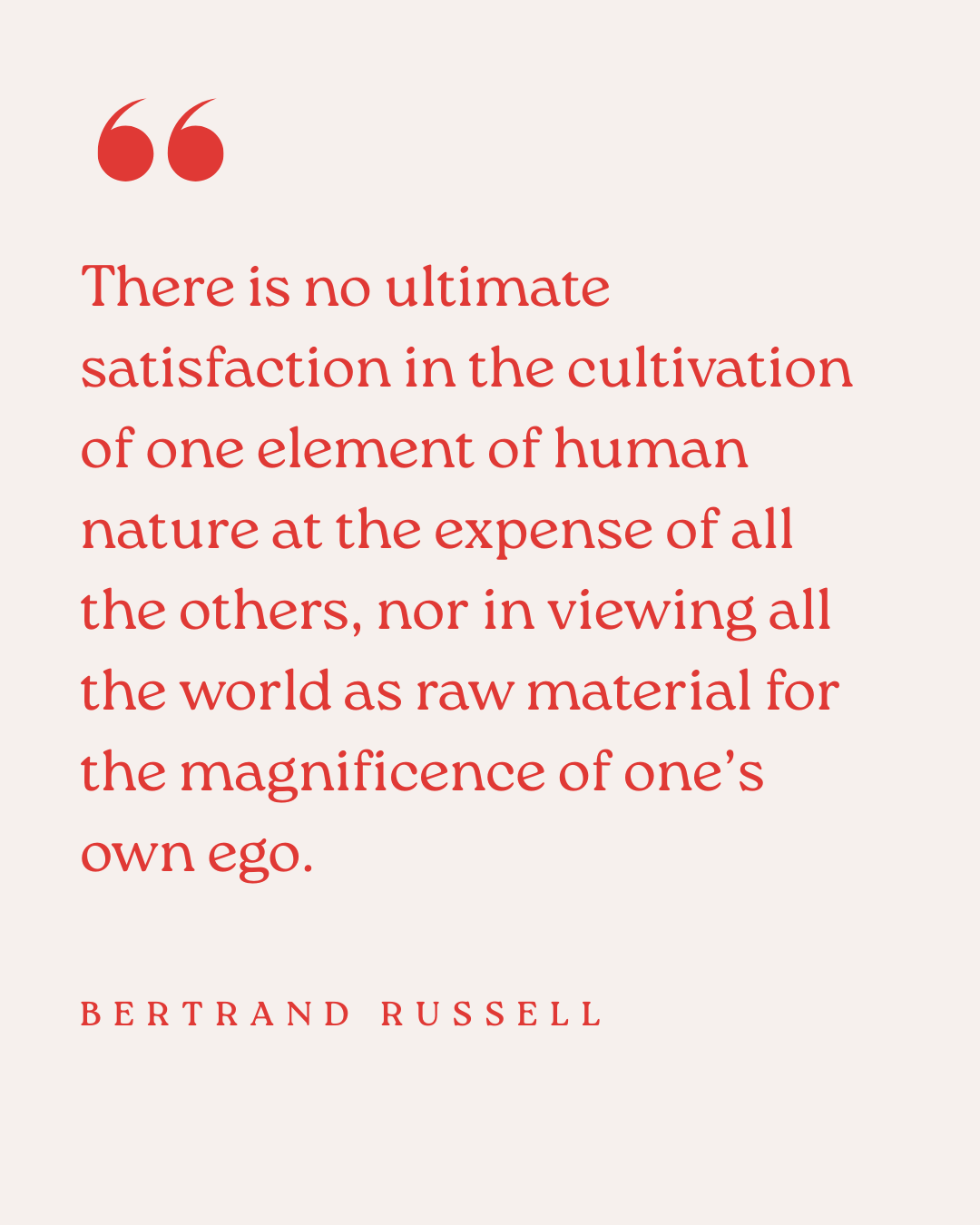
As a culture we are obsessed with busyness as a badge of worth. So consumed by the notion, I’m diagnosing most of us with Shiny Object Syndrome. Shiny Object Syndrome is the inability to feel content where we are. The urge to follow the latest trend, acquire followers, have the “right job”, the good looking partner, wear the latest clothes, go to the cool party instead of hanging out with an old friend, trying to maintain a lifestyle to look important on instagram, you get my drift… In other words, a deep pre-occupation with external validation. The most important validation is internal. It’s much harder to cultivate but the feeling is longer lasting than its counterpart. If we believe in our own worth and value, the external accolades matter less and less.
I know a woman with a big time finance job. She makes millions of dollars a year, flies on private jets, buys designer clothes, lives in a concierge apartment, has had substantial plastic surgery and is still unhappy. Many of us know people like this. People looking in would wonder what she could possibly have to complain about but ye old shiny object syndrome is the problem. She’s plagued with looking for material things outside of herself to tell her she is worthy.
We like to think that when I have x, when I make x amount of money, when I lose x amount of weight, happiness is inevitable but it’s not. Contentment is an inner feeling dependent on our mental state, not what we have or what we look like. More money might make life more comfortable, plastic surgery around a major insecurity may make us feel better about ourselves but it ultimately won’t define our well being in times of inner strife. This cycle keeps us trapped in the pit of a shallow existence trying to temporarily ease our unhappiness. Alignment is about knowing we are enough and not letting distractions veer us away from our purpose.
Mihaly Csikszentmihalyi, best known for Flow, has researched happiness most of his adult life. He concludes it has nothing to do with outside events, money and power cannot obtain it. It is an internal event. He states that “happiness is a condition that must be prepared for, cultivated and defended privately by each person. People who learn to control inner experience will be able to determine the quality of their lives, which is as close as any of us can come to being happy.”
The ideas I’m putting forth aren’t new. Bertrand Russell, a philosopher in 1930 wrote a book called The Conquest of Happiness, diagnosing the same societal ills. He believed that success was only one ingredient in happiness and if all other ingredients were sacrificed to obtain success, happiness would never be attainable. He also noted that “the man divided against himself looks for excitement and distraction…for the moment, they take him outside himself and prevent the painful necessity of thought. Any passion to him is a form of intoxication, and since he cannot conceive of fundamental happiness, all relief from pain appears to him solely possible in the form of intoxication. This, however is a symptom of a deep seated malady. Where there is no such malady, the greatest happiness comes with the complete possession of one’s faculties… the happiness that requires intoxication…is a spurious and unsatisfying kind.”
We have vastly more data now than in 1930, in fact, a freaking ton. In Hidden Potential, Adam Grant found across 105 studies with over 70,000 people that valuing popularity and appearance over growth and connection predicted lower well being. In The How of Happiness, Sonja Lyubomirsky shows that following intrinsic goals make us more likely to be happy, to invest fully, and to succeed. They also satisfy our most basic psychological needs, our need for autonomy, our sense of competence, and our need for relatedness. Harvard’s longest-running study on happiness tracked 724 men across their lifetimes, from 1938 to the present, across different socioeconomic backgrounds. Their finding: connection remains the greatest contributor to human happiness. We were never meant to be isolated or individually minded. The data compounds and compounds. And yet we keep seeking the things that make us more lonely.
When I interviewed Dacher Keltner, who has studied the science of happiness, power, and awe, he explained to me how the more power and wealth we accumulate, the less empathy we have. The brain actually changes. He describes real power as enhancing the greater good. Money and Fame are not real power but rather the illusion of power. “We gain and maintain power through empathy, but in our experience of power we lose our focus on others. We gain and maintain power through giving, but when we are feeling powerful we act in self-gratifying and greedy ways.”
He performed a small study in which he saw how different car owners behaved at streetlights and at a street crossing. In both cases, the car owners most likely to not let a pedestrian cross or to run the light were Mercedes owners. Now of course, just because you have a fancy car doesn’t mean you can afford it but the feeling of power and status is what is important here. That feeling of power is more likely to disconnect you from the people around you.
As Keltner’s work unfolded he recognized that power and privilege can be a form of brain damage. I came to a similar conclusion after spending ample time with celebrities and evaluating that fame had a very specific effect on their brains. Tabloid-era fame of the nineties to early aughts was actual lunacy. It’s not a coincidence that those that came up during that era had very public breakdowns (Britney Spears, Lindsay Lohan, Demi Lovato). There is no way that level of oversight doesn’t have detrimental effects on your brain. Fame takes away your autonomy. And although fame brings many admirers, it doesn’t bring true relatedness. Power may offer a sense of competence, but it diminishes connection. Money expands options but doesn’t satisfy our need for belonging. Extrinsic goals — money, power, fame — don’t tick a single box of our most basic psychological needs.
Joy is our antidote. And I don’t mean joy as a feeling you stumble into. I mean joy as a practice, as a way of orienting your life. After my startup failed, I had nothing left to chase. I was depleted, heartbroken and void of desire. My metric became following what was energetically neutral or joyful. Prioritizing joy changed my entire life. I got by that year with little effort and made the most amount of money I had ever made. The realization that it wasn’t about working harder but more joyfully is really what I want you to take away from this. In Brené Brown’s Atlas of the Heart, she references research showing that while experiencing joy, we don’t lose ourselves, we become more truly ourselves, it reveals more of who we are. My year of heartbreak, using joy as my guide, aided me in finding my way back to myself. And the more we are our authentic selves, the easier we can grasp alignment.
You may remember from my piece on Wounded Ambition, the concept of eudaimonia — fulfillment from purposeful activity. Unlike hedonistic pleasure, eudaimonic pleasure takes longer to diminish. Contentment, which is the better word for what we’re actually after, is sustainable. Pleasure alone is not. When we chase joy, we build stronger neural pathways that allow us to feel seen, supported, and grateful. Psychologists call it predictive encoding: priming yourself to expect a favorable outcome actually encodes your brain to recognize that outcome when it arises. This is why a gratitude practice matters, not as a wellness cliché, but as a genuine retraining of how you perceive your life and its possibilities. (This is why I geek out about neuroplasticity!) Chasing joy is not as easy as it sounds. It’s so hard to cut out the noise or your ego to just be with the feeling. When we’re able to sit with joy, that level of engagement, we hit a frequency that allows life to magnetize to us.
And you know what’s remarkable, we can help others find their way to joy too!
There’s a concept called The Pygmalion Effect: when we genuinely believe in other people’s potential, we can bring that to life. We can encourage people to find more purpose or alignment through recognition of their gifts. Pretty amazing! When we manage our team from the view that people work hard because they love the work, that way of operating is more likely embodied. My brother told me a story of his former employee who had a propensity for negativity. His management style was curt, direct and harsh. He would openly voice cynical feedback without thinking how it would come across or affect the person he was speaking to. He hurt employee’s feelings, undervalued their accomplishments, and sometimes would even think the team was out to get him. My brother’s feedback for him was to always assume good intent, which my brother models well. His team has been able time and time again to defy the odds in their technical abilities and outcomes. This is because he believes in them, he confirms their talents, and helps foster them to fruition.
Not every work environment is like that and we may even be in the wrong job. In Robert Greene’s Mastery, he discusses the idea of counterforce. Life and social pressures will try to thwart our life force (our path of unique genius). Sometimes that’s our parents who want us to live a safe, comfortable life. They may unintentionally or intentionally influence and derail our life’s path. Or maybe you’re afraid to go after your life force, or ashamed of what it is. These distractions can propel us to lose sight of our core self and end up in a job that we don’t enjoy solely to pay the bills. Over time, our work will suffer or we can become resentful. You may even have forgotten that at one point you did have a life-force. You end up asleep in your own life or you become someone you no longer recognize. The false path, Greene notes, almost always attracts us through money, fame, or attention. When we deviate from our calling, we experience what he describes as a kind of emptiness. The universe will hit us over the head again and again trying to lead us back. The question is only whether we’re paying attention.
Unique genius, life force, chasing joy are all terminology for the same thing. In the Bhagavad Gita, they explain that ‘we need to find our dharma, the thing only you were designed to do, and then set out in life to nurture its maturation in every way. The mature gift will take you directly to the corner of the world that needs it most and that’s how we change the world.’ By being fully ourselves living in our dharma. In our modern world, riddled with distraction, it takes concerted effort, commitment to ourselves, and listening to our intuition to find it. We’re so busy chasing the shiny objects, we don’t understand that as we tap into our dharma, we will more freely access them. Humans do the most amazing mental gymnastics. We just have to get out of our own way to receive what we are so desperate for. When we unlock our dharma, life starts to find a flow.
Flow is the space where intuition thrives, where presence coupled with self trust combine with the challenges of the moment and allow us to soar. We become one with the task and transcend time. Flow allows us the closest feeling I’ve ever had to immortality, to feeling into our soul’s possibility. “As elements become more automatic, your mind is not exhausted by the effort and you can practice harder, which in turn brings greater skill and more pleasure. You can look for new challenges, new areas to conquer, keeping your interest high... As the cycle accelerates, you can reach a point where your mind is totally absorbed in the practice, entering a kind of flow in which everything else is blocked out. You become one with the tool or instrument or thing you are studying…it is embedded in your body and nervous system.” The more we look at cultivating flow as a practice, the easier it is to get back to alignment.
Capitalism tells us if we’re not chasing, we’re not worthy, if we don’t work at a breakneck speed, we won’t succeed. I bought into this tall tale, drank the kool-aid like it was the elixir of life. I truly believed that working hard was my golden ticket. If I worked hard enough, I’d become successful. With enough success (power), I would make a lot of money. When I had a lot of money, I’d be able to work less hard. But the way I was living was always conditional on the next step, never on the present. I kept myself so busy there was no time to process what I was experiencing. I was missing my own life. I didn’t stop to pause and enjoy my wins. I wasn’t as present as I could have been with loved ones. One of my main regrets is that I didn’t spend Christmas with my best friend’s family for almost a decade because work felt like a weight I couldn’t relieve myself of. The chasing of shiny objects robbed me of a lot of life’s little moments, the quieter moments that make it meaningful. Sarah Wilson, who I interviewed on my podcast, reminded me that we have to start living our lives right here, right now, we can’t wait for our life to begin. It’s happening. Right. Now.
The research confirms that happiness doesn’t follow success, we have it backwards. In The Happiness Advantage, Shawn Achor proves that we actually become more successful when we are happy. Imagine you’re in the doctor’s office looking for a diagnosis and someone told a heartwarming story to your physician before they entered the office. The story put that doctor in a content, positive mood. That positive mood shows almost three times more intelligence and creativity than a doctor in a neutral state which allows them to make an accurate diagnosis 19% faster. I want that doctor. You want that doctor. When we are happy, we have higher productivity, higher sales, we get better performance reviews and higher salaries. Unhappy employees take more sick days, an extra 15 sick days a year! Joy is essential to our career health. We spend a significant amount of our waking hours at work, we should enjoy the process. Amina AlTai, author of The Ambition Trap, defines ambition as a desire for more life. Yet, often our expression of ambition becomes painful rather than purposeful. We want to live in the purpose, in the joy, in the dharma.
As I’ve adopted this practice, the benchmarks for how I define success in my life have shifted. Inner fulfillment outweighs status or money or any other shiny object. I ask myself often (and you can too in the workbook!): are my values in alignment with my work? How is my quality of life? Am I able to show up as the best version of me? Am I living my dharma? Does life feel joyful? Where is my ego getting in my way? These questions keep me honest and on course.
If you don’t know what your purpose is, if joy feels like a foreign language, start smaller than you think you need to. You don’t need to be dialed in on your life’s calling but below are some signals that can move the needle.
Notice what makes time disappear
Flow is the first clue. What absorbs you so completely that you look up and an hour has passed. Start keeping a list. No entry is too small or too impractical.
Distinguish love from the business of love
I love fashion immensely but not the fashion industry. You can deeply love a medium and be completely wrong about the career part of it. I loved performing but spent the beginning of my career as a shadow artist, in proximity to the the thing I actually wanted. Get specific about which part you love.
Follow the evidence
Life will show you what’s working. The parts of your career or life that keep thriving despite your neglect, despite your fear, despite your resistance, those are signals. I kept DJing and Speaking even when I was telling myself a different story about my future. Eventually, I had to stop arguing with the evidence.
Tolerate the discomfort of not knowing
The older I get, the more I believe that a key piece of life is a deep acceptance of discomfort. We are so practiced at numbing, through our phones, substances, and busyness that we never let ourselves feel. Joy lives on the other side of that discomfort. You have to sit with not knowing long enough for something true to surface. Paradoxically, the more we can tolerate discomfort is what sets us up to live a fuller existence.
Let someone else see you first
Sometimes we can’t find our own light because we’re too close to it. The people who believed in my potential were alerting me to something in myself. Let yourself be seen. Let someone reflect your genius back to you before you’ve fully claimed it yourself! (The Pygmalion Effect!)
We are all brought here with a unique gift to give the world. The work is finding it, claiming it, and building your life around it. Before we can make a fulfilling impact we have to be tapped into the truest part of ourselves (a la Pillar 1.) When we know ourselves, we can check ourselves. When we understand ourselves, we can hear what our intuition is actually telling us, and unpack what is holding us back. That self-knowledge coupled with joyful purpose is what keeps us on the path to alignment.
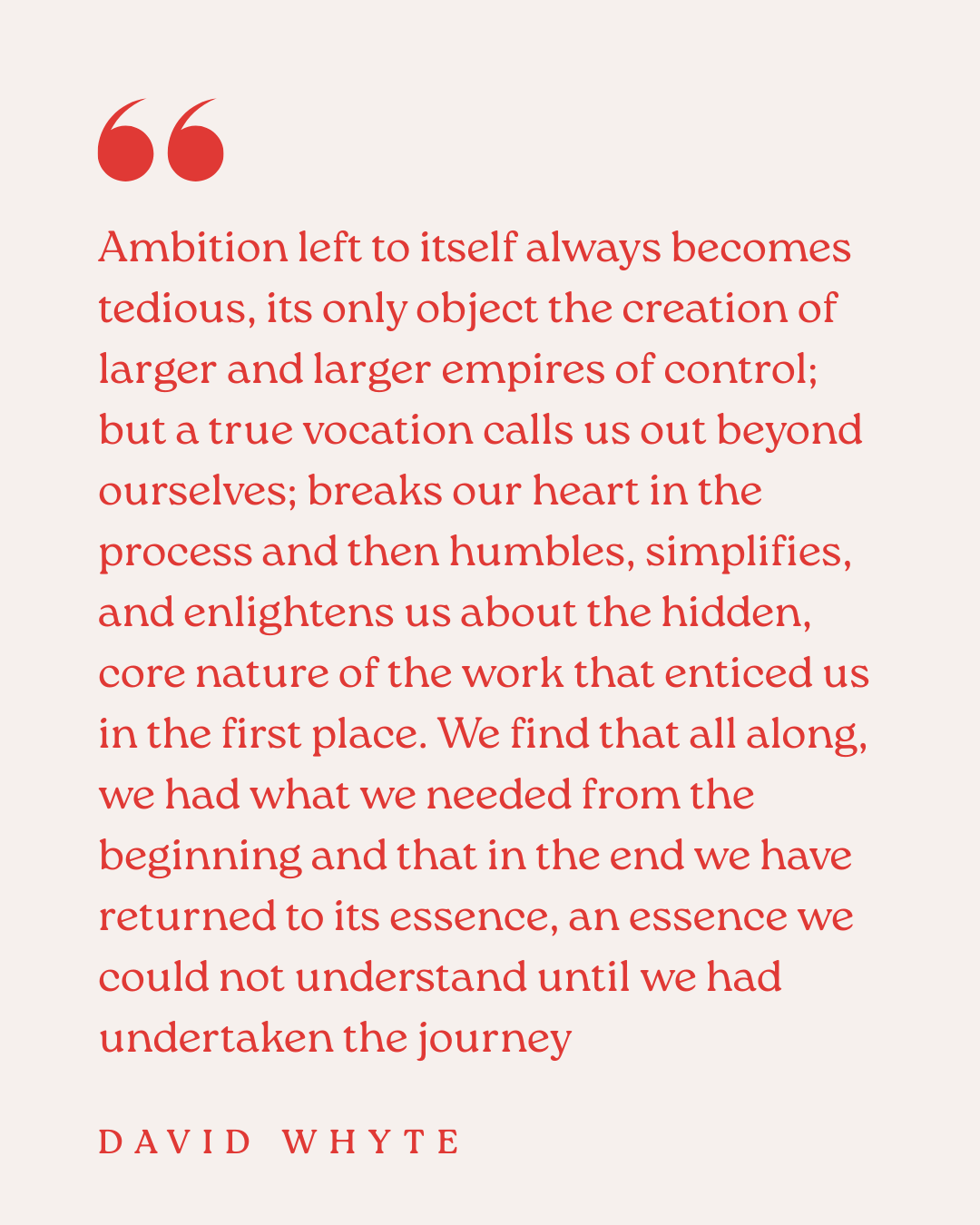
Works Cited
Csikszentmihalyi, Mihaly, and Donald Corren. Flow: The Psychology of Optimal Experience. Recorded Books, Inc, 2024.
Russell, Bertrand. The Conquest of Happiness: Avon Book Division, the Hearst Corporation, 1930.
Achor, Shawn. The Happiness Advantage: How a Positive Brain Fuels Success in Work and Life. Currency, 2018.
Kashdan, Todd B., and Robert Biswas-Diener. The Upside of Your Dark Side: Why Being Your Whole Self--Not Just Your “Good” Self--Drives Success and Fulfillment. Plume, 2015.
Greene, Robert. Mastery. Penguin, 2012.
Harvard Study Reveals the 1 Thing That Makes Humans Happy. Why Are You Doing the Complete Opposite?, www.inc.com/nick-hobson/harvard-study-reveals-thing-makes-humans-happy-you-doing-complete-opposite.html. Accessed 22 Jan. 2024.
Grant, Adam. Hidden Potential: The Science of Achieving Greater Things. Penguin Books, an Imprint of Penguin Random House LLC, 2025.
AlTai, Amina, and Maria Shriver. The Ambition Trap: How to Stop Chasing and Start Living. Books on Tape, 2025.
Lyubomirsky, Sonja. The How of Happiness. Penguin Publishing Group, 2007.
“Understanding the Pygmalion Effect.” Psychology Today, Sussex Publishers, www.psychologytoday.com/us/blog/raising-resilient-children/202505/understanding-the-pygmalion-effect. Accessed 18 Nov. 2024.
Cope, Stephen. The Great Work of Your Life: A Guide for the Journey to Your True Calling. Bantam Books Trade Paperbacks, 2015.